When you register at an online casino, you hand over a lot of personal information. But what happens to it after that? PIPEDA is the Canadian law that protects your data and guarantees you clear rights against any operator. Here’s what you need to know.
PIPEDA Casino Privacy Rights: How Your Data Is Protected in Canada
By Isabell Dreghiciu
Summary
- What Is PIPEDA and Why It Protects Casino Players
- What Personal Information Do Casinos Collect?
- Your Specific Privacy Rights at Online Casinos
- How Casinos Must Protect Your Data
- What Casinos Can and Cannot Do With Your Data
- How to File a PIPEDA Privacy Complaint
- Provincial Privacy Laws vs PIPEDA
- Offshore Casinos and PIPEDA
- Data Breaches: What Happens If Casino Is Hacked
- Summary: Your PIPEDA Privacy Rights
- Sources
What Is PIPEDA and Why It Protects Casino Players
PIPEDA, or the Personal Information Protection and Electronic Documents Act, is the law that sets out how private-sector organizations in Canada can collect and use your personal information.
This means that all casinos in Canada must comply with PIPEDA in order to operate, whether we are talking about provincially licensed casinos or offshore operators. You still have full rights over your data. You can request that it be deleted, but in that case you will no longer be able to access the casino.
Every casino must ask for your consent before collecting your data and is required to protect it. If you notice that a casino is violating PIPEDA, you can file a complaint with the Privacy Commissioner.
Who PIPEDA applies to:
- Casinos licensed by iGaming Ontario operating in Canada
- Offshore casinos accepting Canadian players (commercial activity in Canada)
- Payment processors handling Canadian transactions
- Any organization collecting data from Canadian players
Whether you play at a provincially licensed casino or an offshore one, PIPEDA protects your privacy rights and how your personal data is handled.
What Personal Information Do Casinos Collect?
When you register at a casino, the operator will ask for some personal details. They are legally obligated to verify your identity.
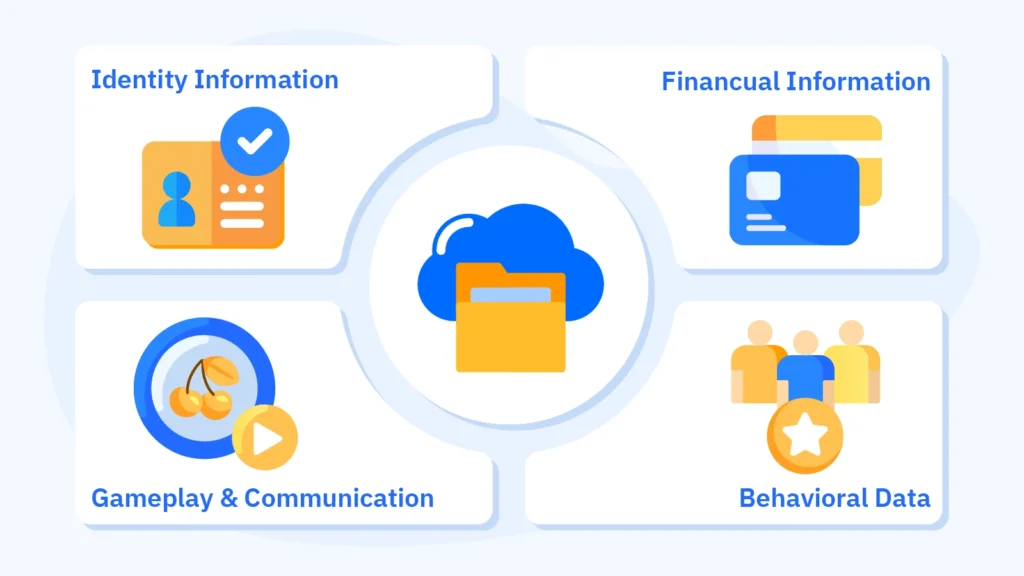
Identity Information & Financial Information
To confirm who you are and that you meet the legal age requirement, you need to provide the casino with your full name, date of birth, address and contact details. You’ll also need to back all of this up with a copy of your ID.
We, the CasinoAlpha team, go through the same process when testing casinos and upload our personal details to provide real and trustworthy reviews
To allow deposits and withdrawals, you will need to provide some banking details to the casino. Don’t worry, these are stored securely. For larger transactions, some casinos may also request proof of source of funds.
Gameplay Information & Communication Records
Casinos can see how you use the platform and record technical data such as your IP address, device information and location. This is how they confirm that you’re playing from a region where gambling is legal. On top of that, if you’ve ever contacted customer support, those conversations will be saved. Don’t worry though, this is completely normal and happens at every regulated casino!
Behavioral Data
Did you know that most casinos also track your behavior on the platform? They can see which games you choose, how much you normally bet and what winnings you’ve recorded. If you ever feel things are starting to get out of control, remember that you have responsible gambling tools available to you. Use them, they’re there for you!
Your Specific Privacy Rights at Online Casinos
Before we go into details, it’s important to understand what rights you actually have when it comes to your personal data at online casinos.
Right to Know
You have the right to know:
- What personal information the casino collects.
- Why this information is collected (the purposes of processing).
- How your data is used.
- Who it is shared with (for example, payment processors, regulatory authorities, or game providers).
- How long the information is retained.
- How you can exercise your data protection rights.
To find this information, review the casino’s Privacy Policy, which is usually available in the website footer. The policy should be written in clear and understandable language, not in complex legal terminology.
Right to Consent
The casino must obtain your consent before collecting your personal data. In most cases, you provide this consent when registering an account. Furthermore, the casino cannot use your data for purposes other than those for which it was originally collected, nor can it share your data with third parties without a valid legal basis.
For consent to be valid, it must be:
- Informed: You must clearly understand what data the casino collects and why it is being collected.
- Voluntary: Your consent must be given freely, without pressure or coercion. Keep in mind that most casinos are not required to provide access to their services if you do not agree to the processing of data necessary for operating your account.
- Specific: Consent for marketing communications must always be separate from consent related to account management and service provision.
If you wish to withdraw your consent, you should contact the casino’s privacy department or data protection team. You can also unsubscribe from marketing emails and promotional messages. If you no longer wish to use the casino’s services, you may close your account, which will prevent the casino from collecting any new personal data from you.
However, you cannot withdraw consent for the processing of essential data, such as age verification, identity verification, and payment information and continue using the casino’s services. This information is required for the casino to operate legally and comply with regulatory obligations.
Right to Access Your Data
You have the right to request access to the personal data that the casino holds about you. At any time, you can ask for a complete copy of the personal information stored in your account, your transaction history, and a record of your gaming activity. In addition, you may request information about how your data has been used and processed.
To obtain this information, submit a request to the casino’s privacy department or customer support team. Clearly state that you would like access to the personal data associated with your account and provide all necessary identification details, such as your name and account information. The operator may also ask you to provide a government-issued ID to verify that you are the account holder.
Once your request has been submitted, the casino must respond within the timeframe required by the applicable data protection laws.
Right to Correction
If you notice that the casino operator has incorrect or incomplete information about you, you have the right to request that it be corrected. To do so, you can ask the casino to update or complete the inaccurate information and provide supporting documents proving that the data on file is incorrect.
The casino is required to review your request and update the information as quickly as reasonably possible. If the casino believes it cannot make the requested changes, it must record and retain your correction request in its records.
Right to Deletion
There are also situations in which you have the right to request the deletion of the personal data that the casino holds about you. Keep in mind that this is only possible when the data is no longer necessary for the purpose for which it was collected, when your account has been closed, or when the legal retention period has expired.
In general, personal data is retained for as long as your account remains open. For closed accounts, casinos typically keep data for between 5 and 7 years in order to comply with anti-money laundering regulations and other legal obligations. On the other hand, data used for marketing purposes must be deleted or removed from marketing lists once you withdraw your consent.
How Casinos Must Protect Your Data
Mandatory Security Safeguards
PIPEDA (Personal Information Protection and Electronic Documents Act) is the federal law in Canada that regulates how casinos, as well as other private organizations, collect and use personal information.
Under PIPEDA, all casinos must protect players’ personal data by following several security measures. Data must be encrypted using SSL/TLS and stored in encrypted form. Only authorized personnel can access this information. Even these employees must go through multi-factor authentication, and audit logs are used to track who accessed the data and when.
The good news is that all data is stored on secure servers, along with protections against hacking and unauthorized access. Regular backups are also performed for additional security.
In the event of a data breach, the casino must notify you and also inform the Privacy Commissioner. They are required to explain what data was compromised and what measures have been taken in response.
What Casinos Can and Cannot Do With Your Data
Not all data usage is the same. Casinos can only use your personal information within strict rules, and there are clear limits they must respect.
Casinos CAN (With Your Consent):
The casino collects all your data and uses it to provide gambling services in a legal and secure way. Here is what the operator you have just registered with does with your information:
- The operation of your gaming account and payment processing can only take place once your age and identity have been verified.
- If required by law, your data must be shared with the relevant regulatory authority.
- Your information is also shared with payment processors so that you can deposit and withdraw funds from the casino.
- To ensure games function properly, the casino works directly with game providers such as NetEnt and Microgaming.
- Marketing messages are sent only if you have chosen to receive them. The good news is that you can unsubscribe at any time.
Casinos CANNOT (PIPEDA Violations):
- To sell your personal data to third parties.
- To use your data for purposes other than those for which you gave your consent.
- To keep your data longer than necessary. For example, if you have closed your account, the casino may keep your data for up to 7 years, after which it is required to delete it.
- To collect information that is not related to gambling. For instance, they are strictly prohibited from collecting your social media passwords.
- To fail to protect your data properly. All casinos are required to implement adequate security measures.
- To refuse access to your personal data without a valid reason. You always have access to your account information.
If you are registered with a casino and it violates one or more of the rules above, we encourage you to file a complaint with the Privacy Commissioner of Canada and also let us know in the comments which operator it is.
How to File a PIPEDA Privacy Complaint
When to Complain
You can file a complaint if the casino you are registered with:
- Does not give you access to the personal data you have requested.
- Does not delete your personal data after the legal retention period has expired (maximum 7 years after account closure).
- Has shared your data without your consent.
- Has experienced a security issue and did not inform you about it.
- Has collected data for which you did not give your consent.
- Does not maintain an adequate level of security, resulting in your data being compromised.
- Has used your data for purposes other than those for which you gave your consent.
Complaint Process
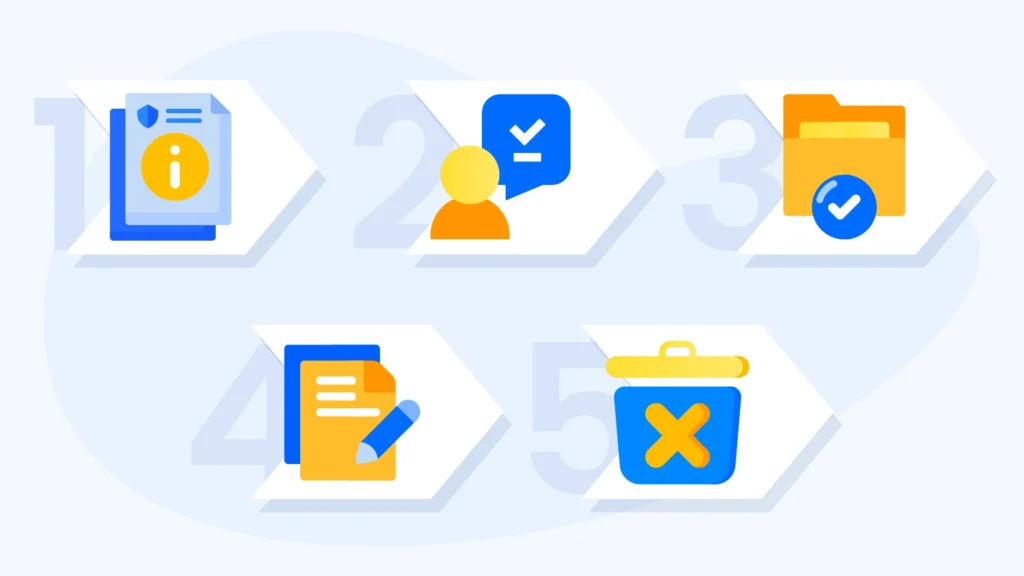
Step 1: Complaint to the casino
Before doing anything else, we recommend contacting the casino first. You can send an email clearly explaining the issue you have identified and request a resolution. Wait for their response, which usually arrives within a few days.
Step 2: File a complaint with the Privacy Commissioner
If you have not received a response, or you are not satisfied with the casino’s solution, you can submit a complaint online directly to the Privacy Commissioner. Attach the casino’s response (if available) or mention that the operator did not reply to your request. Don’t forget to include all relevant evidence.
Step 3: Investigation
After you submit all the evidence, the Commissioner will contact the casino, review the situation, and issue a report with their findings.
Step 4: Outcome
Depending on the results, the Commissioner may recommend that the operator make certain changes. Keep in mind that they cannot award compensation — for that, you would need to go to court. If the casino does not comply with the recommendations, the case may be referred to the Federal Court.
Provincial Privacy Laws vs PIPEDA
Some provinces in Canada have their own personal data protection laws that are considered similar to PIPEDA. For example, Alberta has the Personal Information Protection Act, and Quebec has Law 25. This is a modernized law that is considered even stricter than PIPEDA.
For casinos operating strictly within a single province, provincial law applies instead of PIPEDA. However, if data is transferred to other provinces or outside the country, PIPEDA applies.
According to information analyzed by experts from the CasinoAlpha team, most online casinos are regulated under PIPEDA because personal data typically crosses provincial and national borders. For more on Canadian casino laws and player rights, check our complete legal framework guide.
Offshore Casinos and PIPEDA
Before choosing an offshore online casino, it is important to understand how your personal data is protected and what rules apply to it. We’re here to help!
Do Offshore Casinos Have to Follow PIPEDA?
Yes, however there are a few conditions. Let’s say an offshore casino conducts commercial activity in Canada; in that case, it falls under PIPEDA.
How does this work in practice?
High-tier offshore casinos, meaning those licensed by MGA or the UKGC, generally comply with PIPEDA or equivalent European regulations such as GDPR.
Lower-tier offshore casinos, on the other hand, may not meet proper data protection standards.
The issue arises from the fact that data protection authorities, such as the Privacy Commissioner, have limited power over operators located outside of Canada.
How to protect yourself
We recommend choosing only casinos licensed by the UKGC or MGA, as these follow the highest standards. For even better protection, always read the privacy policy before depositing any money. Never register with a casino that provides vague or unclear information about how your data is handled.
Data Breaches: What Happens If Casino Is Hacked
Even though online casino platforms use strong security systems, data breaches can still occur from time to time. What matters most is how the casino responds and what rights you have in such a situation.
Casino’s PIPEDA Obligations
- Inform you and all other players if there is a real risk of significant harm.
- Notify the Privacy Commissioner about the incident.
- Review and clearly report what data has been compromised.
In general, the notification must be issued as quickly as possible, within a maximum of 72 hours after the incident is discovered.
As a player, you also have certain rights you should be aware of. You can request full details about the breach, close your casino account at any time if you no longer trust the operator, or file a complaint if you believe the casino has failed to meet its obligations. If the incident has unfortunately caused you financial losses, you may also seek compensation through legal action.
Unfortunately, the entire online gambling industry is a target for hackers, as financial and personal data is highly valuable.
How to protect yourself as a player
Unfortunately, casinos are a common target for hackers because of the sensitive data they store. That’s why it’s always better to stay a bit cautious.
We recommend using a strong password. If available, also enable two-factor authentication.
Even though most online casinos use advanced security measures, data breaches can sometimes still occur. The important thing is to be prepared and know how to react in such a situation!
Summary: Your PIPEDA Privacy Rights
Now that we’ve reached the end, let’s quickly recap the information you’ve learned today directly from the CasinoAlpha CA team members.
If you’re wondering what PIPEDA offers you as a player in Canada, it is the federal data protection law. It sets out 10 core principles that govern how all your personal data must be collected and managed.
What are your rights as a player?
As a player, you always have the right to know what personal data is being collected about you and why. Keep in mind! A casino is not allowed to collect your personal information without first asking for your consent.
You also have the right to access the information a casino holds about you and to check whether everything is correct. If you notice any mistakes, you can request corrections at any time.
In addition, once the legal data retention period has expired, you can request that your data be deleted. And if you feel that a casino has not followed the rules, you have the right to file a complaint. We would also like you to tell us in the comments section what response you received to your request!
What are the casino’s obligations?
- The casino must always ask for your consent before collecting your data.
- It is required to protect your personal information.
- It must only collect the data necessary for its operations, nothing more.
- It must delete data once it is no longer needed.
- It must respond to any request you make within 30 days.
CasinoAlpha experts recommend that you always read the casino’s privacy policy, use strong passwords, enable two-factor authentication, and request data deletion once you close your account. This way, you can make sure you stay safe at all times.
Sources
- Office of the Privacy Commissioner of Canada, PIPEDA Requirements in Brief https://www.priv.gc.ca/en/privacy-topics/privacy-laws-in-canada/the-personal-information-protection-and-electronic-documents-act-pipeda/pipeda_brief/
- Office of the Privacy Commissioner of Canada, File a Formal Privacy Complaint https://www.priv.gc.ca/en/report-a-concern/file-a-formal-privacy-complaint/
- AGCO Standards for Internet Gaming, Data Protection Requirements https://www.agco.ca/
Meet Our Experts

Author
Isabell Dreghiciu
Author
Isabell Dreghiciu, an Author at CasinoAlpha since 2021, personally tests every bonus with real C$ deposits and withdrawals to uncover hidden terms, explains provincial gambling laws and tax implications on Canadian winnings using plain language, and continuously updates content to reflect regulatory changes.

Recommended Articles

Casino Bonus vs No Bonus: 6-Month Total Cost Analysis
Should you take the welcome bonus or not? The question sounds simple, but the answer comes down to a single factor most players overlook: the wagering requirement. To see exactly what difference it makes, we compared two players with the same C$5,000 budget, the same games, and the same six-month period – one claimed every bonus offered, the other played with cash only. The numbers at the end show a C$720 gap between them, and the reason behind that gap is worth understanding before you hit “claim bonus” next time.
By Isabell Dreghiciu

Kahnawake: Canada's Indigenous Gambling Regulator
The Canadian online gambling market is regulated by several licensing authorities, but few have a story as unique as the Kahnawake Gaming Commission (KGC). Established by the Mohawk community of Kahnawà and active since the early days of the internet, KGC has grown into one of the world’s oldest and most recognized online gambling regulators. In this guide, we’ll explore its unique legal status, how its licensing system works, the level of protection it offers players, and the important role it continues to play in Canada’s online gaming industry.
By Isabell Dreghiciu

Hit Frequency vs RTP: Why You Bust Fast on High RTP Slots
Two games with the same RTP can offer you two completely different gaming experiences. Why? They have different hit frequencies. If you don’t know what this metric is, you’ve come to the right place. In this guide, we’ll explain step by step what hit frequency actually means and why it matters even more than RTP when choosing a game.
By Isabell Dreghiciu

Income-Based Casino Budgeting: The 5% Rule for Canadians
Setting a gambling budget seems simple until you actually have to decide how much you can afford to spend. We’re here to help! In this guide, we’ll show you a simple approach to setting your gambling budget. We’ll start with a 5% limit. Let’s go through the steps to calculate your budget.
By Isabell Dreghiciu

Playing While Traveling: VPN, Geolocation, Cross-Border Rules
Have you left Canada for a few weeks and want to play online casino games? Your password works, your account is still active, but are you actually allowed to play while you’re abroad? This is where things get a little more complicated.
By Isabell Dreghiciu
Most Read
1.