This article provides predictive analysis about potential Canadian adoption of European-style gambling restrictions based on international regulatory trends as of January 2026. This is not legal advice. Predictions are analytical opinions. Canadian regulations may differ significantly from European models.
Canada's Gambling Future: Germany's Playbook Coming in 2030
By Isabell Dreghiciu

Summary
Germany’s 2021 Gambling Crackdown: The European Model
In 2021, major changes took place in Germany’s online gambling industry. Through the Interstate Treaty on Gambling, all online casinos operating in the grey market were legalized, but the strictest restrictions were also put in place.
What does this mean for players?
Regardless of your income, as a player you cannot deposit more than €1,000 per month. This rule does not apply per casino, but across the entire market. On top of that, the maximum bet per spin is €1, and you have to wait 5 seconds between spins. This means fast-paced, high-stakes play is simply not possible.
Every casino is also required to display a panic button. If you press it, the casino will automatically exclude you for 24 hours. Every deposit is monitored through a system called OASIS, which tracks player activity across all licensed platforms simultaneously.
How did the industry react to these changes?
Many operators consider these restrictions excessive, but were forced to comply in order to operate on the German market. Players are also unhappy with the €1,000 limit.
What does the CasinoAlpha team think will happen in Canada?
We consulted with every member of the CasinoAlpha team and reached a common conclusion. We believe that by 2029-2030, a deposit monitoring system will be developed in Canada as well. If addiction data justifies the step, we may also see imposed bet limits. Our confidence level is 45% it remains to be seen whether we are right.
Deposit monitoring applies to the UK also, and you can read all about it in our article.
Why Canada Might Follow Europe’s Restrictive Path
Europe has always set the tone in gambling regulation. For example, the UK was the first to introduce competitive licensing back in 2005. Canada only adopted this model in 2022. The UK’s responsible gambling standards were later picked up by Ontario and Alberta. Now Europe is going further and introducing stricter restrictions!
The regulatory cycle:
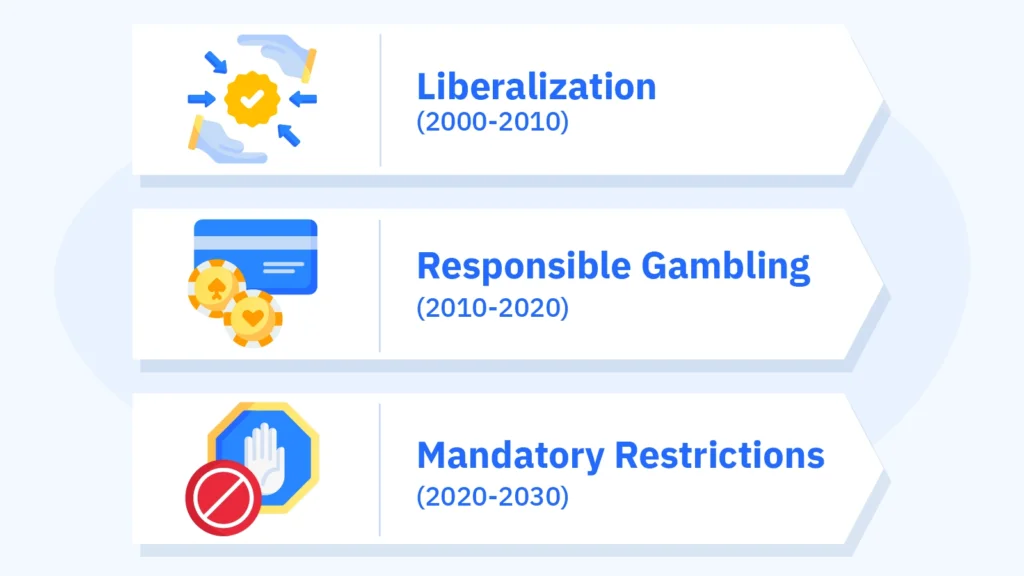
- Phase 1 (2000-2010): Liberalization. Markets opened up and operators enjoyed maximum freedom.
- Phase 2 (2010-2020): Responsible gambling options were introduced, such as self-exclusion and deposit limits.
- Phase 3 (2020-2030): New mandatory restrictions appear every year, such as bet limits and financial checks.
Where does Canada stand right now?
In our view, Canada is still in Phase 2, while Europe already entered Phase 3 back in 2021. We have noticed that Canada tends to follow European trends with a 5 to 8 year delay. So we expect Canada to enter Phase 3 somewhere between 2026 and 2029.
See how legal online gambling is in Canada from our guide.
European Restrictions Canada Might Adopt
We don’t believe all German restrictions will apply to Canada as well. However, we have identified a few that are likely candidates for implementation in Ontario and Alberta within the next 3-5 years.
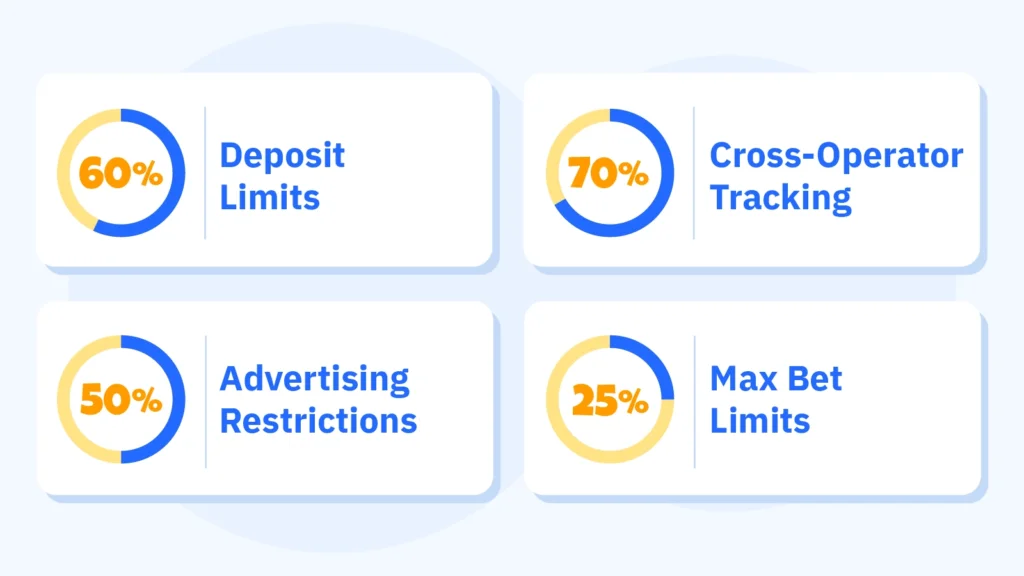
Deposit Limits | Our Confidence: 60%
The €1,000 monthly cap (equivalent to approximately C$1,500) is without a doubt the strictest in the world. We believe Canada would implement a more relaxed version, with a monthly limit of around C$2,000-3,000. On top of that, this limit can be exceeded through a financial affordability check.
Let’s say you deposit C$2,500 monthly without being verified. To exceed this limit, you would submit a request and provide proof of income (pay stubs, bank statements). If the analysis shows that your income justifies a higher level of play, the casino will approve your request.
In this way, the British financial risk assessment approach is followed, and Canadian regulatory authorities can identify problem gamblers.
Cross-Operator Deposit Tracking Is Coming to Canada | We’re 70% Sure
The German OASIS system controls everything: deposits, losses, and self-exclusions. All licensed operators are connected to a central database. If a player loses €300 at Casino X, and the next day loses another €700 at Casino Y, the system will automatically block all further deposits because the monthly €1,000 limit has been reached.
Advertising Restrictions (Moderate Probability | 50%)
Germany didn’t stop there, it banned gambling advertising during sports broadcasts. On top of that, celebrities are not allowed to promote casinos.
What does gambling advertising look like in Canada right now?
As you’ve probably noticed, there is a commercial every single break on TV. On top of that, athletes are constantly promoting betting platforms on their social media. There is even a federal bill that tried to limit advertising, but it got stuck.
Looking ahead, we don’t expect Canada to go as far as Germany, but a few changes will be introduced. Ads targeting minors will be banned, responsible gambling messages will become mandatory in all advertising, and athletes will no longer be allowed to promote betting platforms.
Max Bet Limits (Low Probability | 25%)
Germany’s €1 maximum bet per spin on slots is the most controversial restriction. High-income players argue it is absurdly paternalistic, a billionaire can’t bet €10 per spin? Operators say it destroys the high-roller market segment.
Canada is unlikely to copy this. The Canadian regulatory philosophy favors risk-based intervention, identifying problem gamblers through behavior patterns, over blanket restrictions that assume everyone needs protection. Maximum bet limits penalize responsible high-income players equally with problem gamblers, which is philosophically inconsistent with the Canadian approach.
Canada’s alternative approach: Flagging players who bet unusually high relative to their income- for example, earning C$60,000 annually and betting C$100 per spin is a red flag. An affordability check is triggered. High bets are allowed for verified high-income players.
Which Canadian Provinces Would Adopt Restrictions
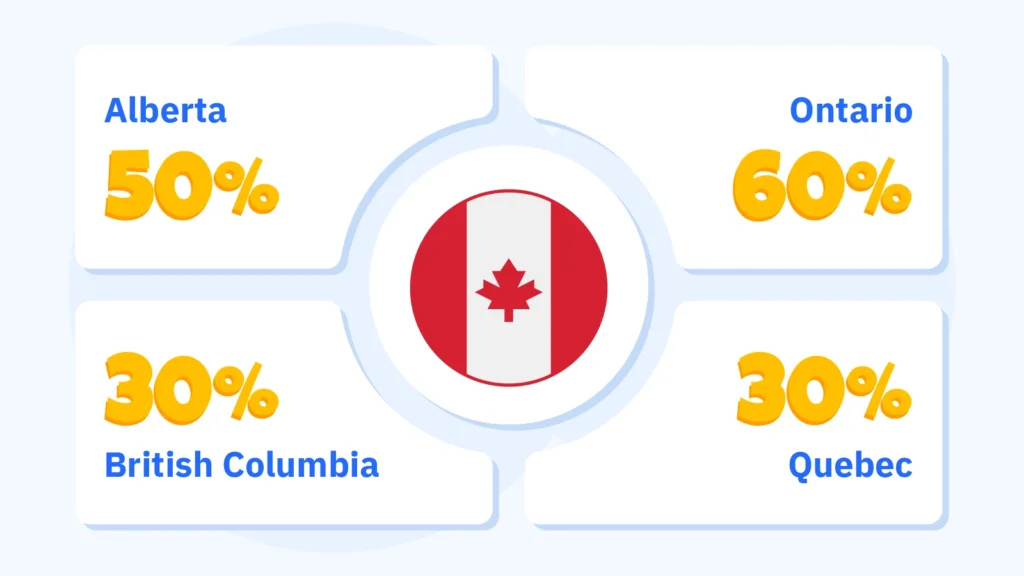
Even if European-style restrictions are introduced in Canada, that doesn’t mean things will happen the same way across the entire country. Each province has its own political culture and its own regulatory philosophy. We put our heads together at CasinoAlpha and here is what we think.
Why do we think Ontario will make the first move?
Ontario has the biggest advantage: real market data. AGCO collects information about player behavior, how much they deposit, how long they spend on platforms, and what their loss patterns look like. If the data shows an increase in problem gambling, the pressure to act will be hard to ignore. We are 60% confident that Ontario will make the first move!
On top of that, ConnexOntario’s helpline reported more calls after the iGaming Ontario launch.
Alberta is watching and waiting, but it will likely follow
Alberta is more cautious. It will observe what happens in Ontario first. If Ontario introduces restrictions and they work, Alberta will follow, yet you can see how regulated online gambling in Alberta is from our article.
Quebec and BC are at the bottom of the list. They will open their markets to private operators first, and only then introduce restrictions. We believe they will operate without major restrictions for a period of time.
The CasinoAlpha team also considers the possibility that the federal government imposes a minimum set of rules that apply across all provinces. Essentially, there would be a national standard that includes deposit monitoring, advertising limits, and self-exclusion.
So regardless of province, there will be clear rules that all casinos must follow. Until then, if you feel like you have a problem with gambling, take a look at our responsible gambling guides!
Player Impact: What Restrictions Mean
If European-style restrictions were introduced in Canada, players would certainly feel the impact, especially those who are used to making large deposits. Here is how this change would affect them, depending on which category they fall into:
Casual players (under C$500 per month)
For these players, the impact is minimal. The restrictions introduced in Europe generally target players with problematic behaviors who bet large sums of money. If you are the type of player who bets occasionally, a monthly deposit limit of C$2,500 would certainly not affect you.
High-income players (C$2,000-10,000 per month)
Here things change a little. If Canada adopts a flexible monthly cap of C$3,000, you will certainly be affected. A hard cap with no override option is not the most pleasant thing to deal with.
Problem gamblers (chasing losses)
These are the intended beneficiaries. Deposit caps were introduced with these players in mind. On top of that, there is also a panic button on screen that provides emergency self-exclusion.
High-roller players
Many of these players will end up choosing offshore casinos. If licensed casinos impose restrictions, they will automatically lose access to high-stakes games.
Summary: European Crackdown Impact on Canada
Just a reminder that the German model, implemented in 2021, imposes a hard monthly cap of €1,000, a maximum bet of €1 on slots, and a minimum interval of 5 seconds between spins. Every casino provides players with a panic button that offers immediate self-exclusion.
We don’t think Canada will follow Germany’s path. But changes are coming – we are 45% confident. Most likely a monthly cap of C$2,500-3,000 that you can exceed if you prove your income. Ontario will probably go first – 60% chance by 2030, followed by Alberta. Quebec and BC are still up in the air.
There will be an impact on players, but only for those who bet large amounts. If you are a casual player, you will not be affected.
What could stop these changes? The Canadian philosophy differs from the European one. That is exactly why there is a chance no changes will take place. What you can do is monitor AGCO and AGLC policy consultations on deposit limits, prepare your income documentation if you are a high-spending player, and check our website to stay up to date with all the changes!
Our conclusion is that Canada will likely adopt a softer version of European restrictions by 2029-2030. This approach will balance player protection with the freedom to play responsibly at higher stakes.
Sources
- IDnow, Glücksspielstaatsvertrag (GlüStV) – Germany Gambling Regulations, https://www.idnow.io/glossary/gluecksspielstaatsvertrag-glustv/
- Legal500, Germany: Gambling Law – Country Comparative Guides, https://www.legal500.com/guides/chapter/germany-gambling-law/
- QMRA, Online Gambling Deposit Limits in Germany, https://qmra.eu/online-gambling-deposit-limits-in-germany/
- Yogonet, How the 2021 German Gambling Regulation Changed the Market, September 16, 2025, https://www.yogonet.com/international/news/2025/09/16/115363-how-the-2021-german-gambling-regulation-changed-the-market
Meet Our Experts

Author
Isabell Dreghiciu
Author
Isabell Dreghiciu, an Author at CasinoAlpha since 2021, personally tests every bonus with real C$ deposits and withdrawals to uncover hidden terms, explains provincial gambling laws and tax implications on Canadian winnings using plain language, and continuously updates content to reflect regulatory changes.

Recommended Articles

Casino Operating Costs Explained: Why Some Afford Better Bonuses
Have you ever wondered why two online casinos might offer completely different bonuses? Keep in mind that behind every offer there are a number of casino operating costs, and all of these can affect the promotional budget. Let’s figure out together how to choose not only the best casino, but also the best bonus!
By Isabell Dreghiciu

Casino Account Closures: Your Rights When Banned
You log into your player account, and instead of the lobby, you get this message: your account has been closed. No explanation, just a line about breaking the terms, worse still if you had money in there, since your balance stays locked.
By Isabell Dreghiciu

New Casino vs Established: Risk Analysis
A brand-new casino with a huge bonus, or an older one with a solid reputation? The choice is never as simple as it looks. Each option comes with its own advantages and risks, and the real difference doesn’t necessarily come down to the casino’s age, but to what’s actually standing behind it.
By Isabell Dreghiciu

Why 100% Match Bonuses Beat 300%
The 300% deposit bonus offered on an online casino platform can be quite misleading. This is because the percentage of Canadian players who try to get something out of it by meeting its wagering terms comes to only 82%. It is important to mention here that it is all about terms and conditions and not luck since there are 50x-60x wagering terms associated with the offer, a C$500 maximum amount limit, and terms for deposit and bonus wagering. Compare this with the 100% deposit bonus that involves 25x-40x wagering terms. In case you have read the article, you know that 62% of players meet the terms and get a profit.
By Adela Mariuta
AGCO Penalties for Relax Gaming and Arrise Solutions
On 7 May 2026, many players saw that some games were missing from Ontario casinos. We had no clue why this was happening, but things got clear days later. AGCO issues penalties against Relax Gaming and Arrise Solution because their games were available on unregulated websites outside Ontario.
By Adela Mariuta
Most Read
1.