Gambling can be a form of entertainment, but for some people, the line between fun and a genuine problem becomes hard to see. In this guide, we explain what gambling addiction means from a clinical standpoint, the criteria specialists use to identify it, and how you can recognize the signs early on. Our goal is to help you better understand this topic, whether it concerns you directly or someone close to you.
Problem Gambling Warning Signs: A Self-Assessment Guide
By Isabell Dreghiciu

Summary
What Is Problem Gambling (Clinical Definition)
Clinically, most Canadian health authorities use the term gambling disorder. However, most websites online will refer to it directly as gambling addiction.
DSM-5 Clinical Criteria
The DSM-5 sets out nine criteria that can help you understand whether or not you’re dealing with a gambling addiction. These include: being constantly preoccupied with gambling, needing to bet larger amounts to feel the same excitement (tolerance), and feeling restless when trying to cut back. The list goes on, but you’ll be able to see all of them a bit further down.
What’s important to understand is that if you check four or more criteria from the list within a 12-month period, this means you could be diagnosed with a gambling disorder. The severity can be classified as mild, moderate, or severe, depending on how many criteria apply to you.
A Spectrum, Not a Switch
Another thing to understand is that gambling addiction doesn’t work like an on/off switch. For example, you might show early signs that are low in intensity.
However, these can gradually get worse over time. That’s exactly why we put together this guide, we focus on early warning signs so you can recognize them from the start, not when it’s already too late.
Financial Warning Signs
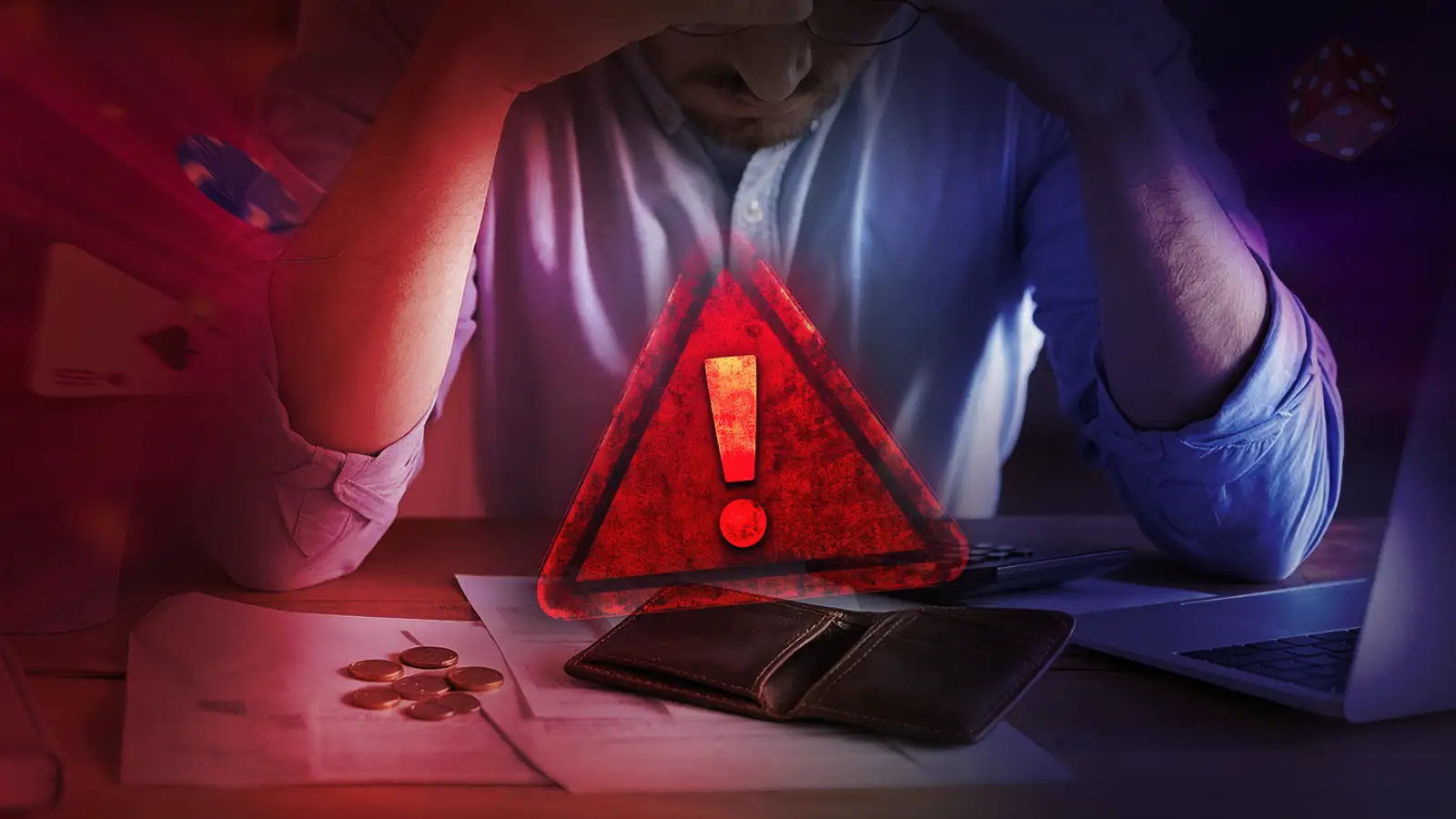
Money problems are usually the first visible sign, especially to those around you. Often, the person gambling isn’t even aware of it yet. These problems tend to escalate in a predictable order:
- You spend money meant for rent, utilities, groceries, or other essentials.
- You borrow money from family or friends, or even turn to lenders, to keep gambling.
- You max out your credit card limit.
- You sell personal belongings to raise money.
- You hide your losses and bank statements from your partner.
- You keep topping up the amounts you deposit.
- You exceed the limits you set for yourself.
- You fall behind on bill payments or debts.
Do you recognize one or more of these signs in yourself? If the answer is yes, this issue deserves to be taken seriously. Keep reading to learn more about this topic and where you can turn for help.
Behavioural Warning Signs
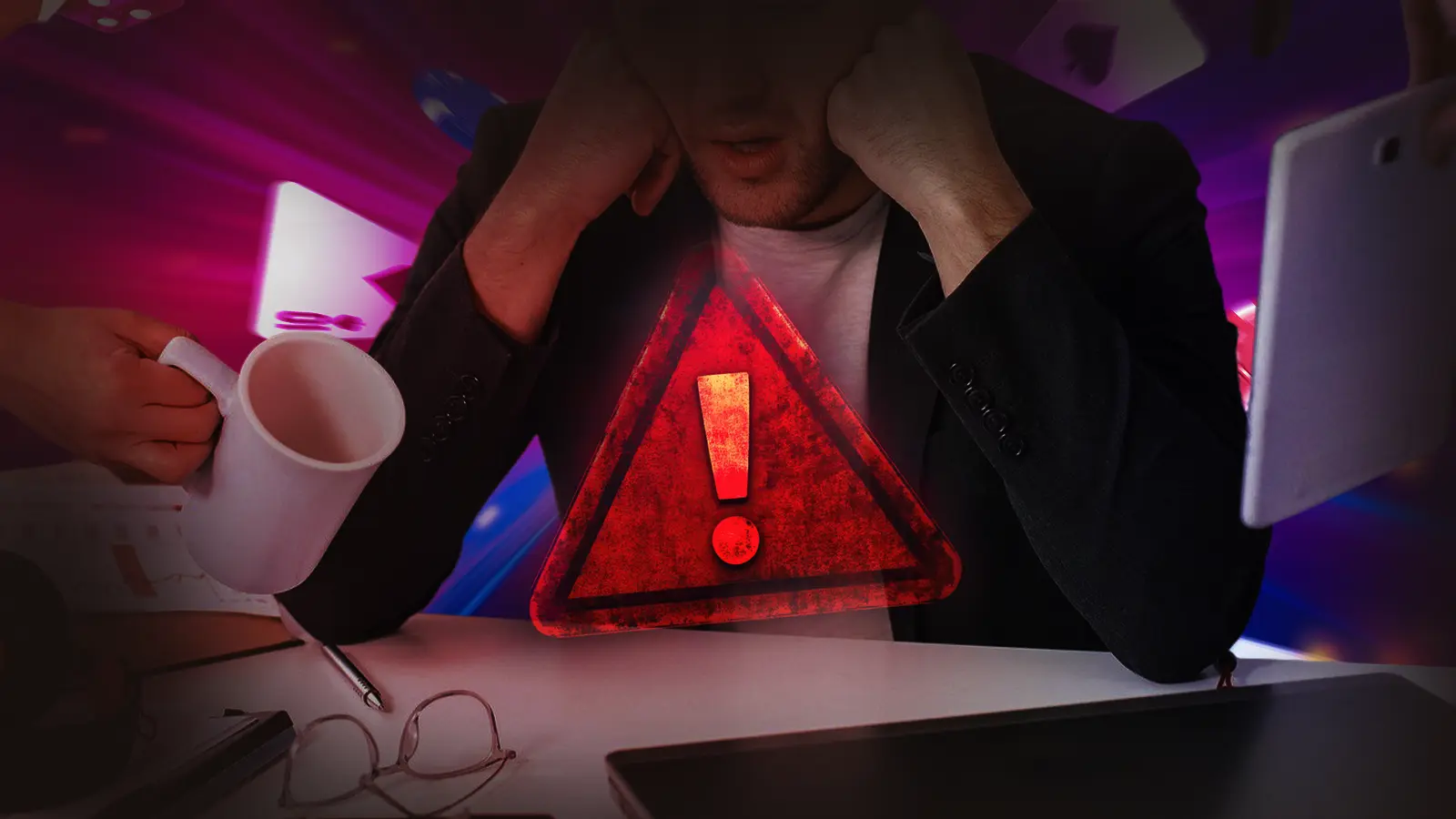
It’s not always just about the money involved; it’s also about the changes that appear in the behavior of someone struggling with gambling addiction.
- Tries to win back losses. Goes back to gambling the very same day, thinking about recovering all the money that was lost.
- Needs bigger bets to feel the same excitement as before. If this happens to you too, it’s the first sign that tolerance has developed.
- Has tried many times to stop gambling, but hasn’t succeeded.
- Loses track of time while gambling and ends up staying much longer than planned.
- Gambles secretly or lies to those close to them.
- Ends up neglecting their job, studies, or even household chores.
- Becomes restless or agitated when trying to cut back on the time spent gambling.
- Puts gambling above other activities they used to enjoy, like going out with friends.
If you recognize these signs in yourself or maybe in someone close to you, it would be best to talk to a specialist. There’s no shame in asking for help!
Emotional Warning Signs

Unfortunately, gambling addiction can affect your mood and mental health long before things become visible on your bank statement.
These subtle signs are the hardest to notice from the outside, since the person struggling with gambling often knows how to hide them well.
- You use gambling as an escape from boredom, stress, or other uncomfortable feelings.
- You feel anxious and panicked when thinking about the debts you’ve built up from gambling.
- You feel ashamed or even guilty after a gambling session, and you promise yourself you’ll stop, promises you don’t keep.
- You experience sudden mood swings, depending on the outcome of a session.
- You become defensive when someone asks you about your gambling.
- You feel helpless or trapped because of your debts.
If thoughts of self-harm or suicide come up alongside any of these signs, this is a mental health emergency, not just a gambling-related problem. If you or someone close to you is in this situation, call 9-1-1 directly or go to the nearest emergency room. Ask for help!
If you need confidential support, you can call Talk Suicide Canada, available 24/7. This is Canada’s national suicide crisis line, reachable at 9-8-8, and it can quickly connect you to local resources.
Relationship Warning Signs
The truth is, gambling problems rarely stay contained to just one person. Unfortunately, the partner, parents, sometimes the children, or even friends end up noticing a pattern before the gambler is ready to admit they have a problem.
- There are frequent, repeated arguments about money or time spent away from home, all of it directly tied to gambling.
- Lies told to family members or a partner about money lost or time spent at the casino.
- Broken promises, over and over again.
- Family members end up covering debts and managing the consequences on behalf of the person struggling with addiction.
- People close to them start noticing the tension, or even their absence.
- Isolation from loved ones, as gambling becomes the main focus of their life.
If two or more of these warning signs apply to you, our recommendation is to seek help. There’s no shame in struggling with a gambling addiction, and having someone close by who understands you can make it easier to get through this.
Provincial Helplines
We’ve also prepared a short test, specifically the Problem Gambling Severity Index (PGSI), a nine-question screening tool. We’ve drawn it from the Canadian Problem Gambling Index (Ferris & Wynne, 2001), and it’s the tool recommended by most health authorities. It’s a first step in self-assessment to help you figure out whether or not you have a problem.
You’ll need to think about the last 12 months, and for each question, score yourself as follows:
- 0 for Never
- 1 for Sometimes
- 2 for Most of the time
- 3 for Almost always
At the end, add up your total score. Depending on your final score, here are the official validated ranges:
- Score 0: You don’t have a gambling problem.
- Score 1-2: You fall into a low-risk level, with few or no negative consequences.
- Score 3-7: You’re at a moderate risk level, leading to certain negative consequences.
- Score 8 or more: Unfortunately, you have a gambling problem and may be facing negative consequences.
Here are the questions you need to answer:
- Have you bet more than you could really afford to lose?
- Have you needed to gamble with larger amounts of money to get the same feeling of excitement?
- When you gambled, did you go back another day to try to win back the money you lost?
- Have you borrowed money or sold anything to get money to gamble?
- Have you felt that you might have a problem with gambling?
- Has gambling caused you any health problems, including stress or anxiety?
- Have people criticized your betting or told you that you had a gambling problem, regardless of whether or not you thought it was true?
- Has your gambling caused any financial problems for you or your household?
- Have you felt guilty about the way you gamble or what happens when you gamble?
Keep in mind that the higher your score, the more it’s worth reaching out for help. We don’t want to alarm you, this is just a screening tool, not a diagnosis, but it can help you decide whether it’s worth having a serious conversation with someone who can help you!
Self-Exclusion as Prevention
Self-exclusion is a good option because it lets you voluntarily block your own access to gambling for a set period of time. It’s especially useful when used before reaching a crisis point. However, how it works depends largely on where you live and which platform you’re playing on.
Self-Exclusion in Ontario
In Ontario, for example, self-exclusion is unified through iGaming Ontario’s Centralized Self-Exclusion Program. It’s accessible through the BetGuard platform. With a single registration, you can exclude yourself from all regulated iGaming operators in Ontario, for a minimum period of 6 months.
You can even opt for 1 year or 5 years. All operators check your registration status immediately, so you’ll be blocked right away, and any bet placed within 24 hours before your exclusion is generally voided and refunded. Land-based casinos in Ontario, however, have their own separate system, called My PlayBreak.
Self-Exclusion Outside Ontario
Outside Ontario, there’s no single self-exclusion registry. That’s because most Canadian provinces don’t have a licensed online gambling market the way Ontario does. Players gamble on offshore sites instead, which means each operator sets its own responsible gambling tools.
If you want to self-exclude, you’ll need to do it separately with each operator, whether we’re talking about land-based casinos or online platforms.
Treatment Resources Canada-Wide
Besides the provincial helplines mentioned above, there are a few other resources available across Canada, specifically:
- Gamblers Anonymous Canada organizes free support meetings, both online and in person. It’s available in most provinces and is based on a 12-step model.
- The Responsible Gambling Council is a non-profit organization in Canada that manages treatment centres and helplines you can reach out to if you need help.
- If you prefer online options, GamTalk is a completely free and anonymous online community. It’s also meant for family members, so if that applies to you, don’t hesitate to join the community.
- Most provincial health authorities offer free counselling for people struggling with gambling addiction. You can access it directly through the provincial helpline listed above.
- If your distress is also accompanied by thoughts of self-harm, Talk Suicide Canada (9-8-8) is the first number you should call.
The Bottom Line for Players
Gambling addiction doesn’t develop overnight, that much is certain. It usually starts with a bigger bet placed to win back a loss. Then a small lie about how much was spent creeps in, and you’re already thinking about the next gambling session.
The warning signs covered in this guide, along with the PGSI self-assessment, will help you recognize the problem early on, rather than after a financial or relationship crisis has already set in.
If you feel like you need help, you can call the helpline in your province, it costs nothing. On the other end of the line are people trained to help you. Early intervention leads to better outcomes, and awareness is really the first step toward recovery.
How We Verified This
Every claim in this guide, both clinical and numerical, was checked against a primary or official source before publishing. On top of that, we followed the same verification standard we apply throughout the CasinoAlpha CA team’s 47-factor review process.
Both the PGSI questions and the scoring ranges were confirmed directly from the original Canadian Problem Gambling Index documentation, not from paraphrased summaries. We personally verified every helpline phone number by checking each provincial health authority’s website.
All the self-exclusion details for Ontario were also confirmed against official AGCO and iGaming Ontario documentation. Keep in mind, though, that this guide was last updated in July 2026, so if a phone number is no longer working, check the provincial health authority’s website for the updated number.
Responsible Gambling Resources
We at CasinoAlpha Canada treat responsible gambling as a baseline requirement, not a secondary concern. If gambling has stopped being an enjoyable activity for you, or if any part of this guide described your situation or that of someone close to you, we’ve put together a complete list of the resources available to you:
Emergency: If you or someone close to you is in danger, call 9-1-1 immediately or go to the nearest emergency department.
Talk Suicide Canada: 9-8-8, call or text, available 24/7. If you’re having thoughts of suicide, call this number right away.
- Your provincial gambling helpline: see the full, verified list above for your province or territory.
- Gamblers Anonymous Canada: free peer-support meetings, both in person and online, available nationwide.
- Responsible Gambling Council: responsiblegambling.org, a Canadian non-profit directory of treatment centres and provincial resources.
- GamTalk: a free, anonymous online support community for gamblers and their families.
- Self-exclusion: available through iGaming Ontario/BetGuard in Ontario, and directly through individual operators or provincial lottery corporations elsewhere in Canada.
You’re the only one who can decide which type of support to reach out to. We’ve given you a clear overview of all the options available. Choose the one that’s right for you!
Disclaimer: This article is for general informational and educational purposes only. We do not provide medical or psychological advice. Only a qualified doctor can help you with that. If you’re concerned about your own behaviour, contact one of the resources listed above.
Meet Our Experts

Author
Isabell Dreghiciu
Author
Isabell Dreghiciu, an Author at CasinoAlpha since 2021, personally tests every bonus with real C$ deposits and withdrawals to uncover hidden terms, explains provincial gambling laws and tax implications on Canadian winnings using plain language, and continuously updates content to reflect regulatory changes.
Recommended Articles
Ontario Licensed Casinos vs Offshore Sites
Here’s your newest CasinoAlpha.ca’s detailed legal guide to Ontario’s regulated iGaming marke where we analyse 49 licensed operators, AGCO player protections, $261M provincial revenue impact, and how Ontario’s model compares to other Canadian provinces and offshore casinos.
By Adela Mariuta

Casino Winnings Taxes Canada Guide
All players want to know whether or not taxes on casino winnings should be paid in Canada. Luckily, the answer is no, since Canadian law doesn’t add any tax to casino winnings. Hence, even if players earn C$500 or C$50,000, all the money they withdraw remains in their property without any returns to the state. The CRA doesn’t mention casino winnings as taxable income, and this applies to earnings generated from any licensed online casinos, provincial sites like PlayNow or PlayAlberta, or international casinos that own an MGA or a Curacao gambling license.
By Adina Minculescu
UK Financial Risk Checks Are Coming to Canada: What Deposit Monitoring Means
This article provides predictive analysis about potential Canadian adoption of UK-style financial risk assessments based on international regulatory trends as of January 2026. This is not legal advice. Predictions are analytical opinions. Actual regulatory implementation may differ significantly from UK model.
By Adela Mariuta

Kahnawake: Canada's Indigenous Gambling Regulator
The Canadian online gambling market is regulated by several licensing authorities, but few have a story as unique as the Kahnawake Gaming Commission (KGC). Established by the Mohawk community of Kahnawà and active since the early days of the internet, KGC has grown into one of the world’s oldest and most recognized online gambling regulators. In this guide, we’ll explore its unique legal status, how its licensing system works, the level of protection it offers players, and the important role it continues to play in Canada’s online gaming industry.
By Isabell Dreghiciu

Interac's 2026 Gambling Transaction Changes: New Limits and What They Mean for Players
This article provides predictive analysis about potential Interac and Canadian banking policy changes affecting online gambling transactions as of January 2026. This is not financial advice. Bank policies vary by institution and change frequently. Predictions are analytical opinions based on current trends.
By Anca Iamandi
Most Read
1.