This article provides predictive analysis about potential Interac and Canadian banking policy changes affecting online gambling transactions as of January 2026. This is not financial advice. Bank policies vary by institution and change frequently. Predictions are analytical opinions based on current trends.
Interac's 2026 Gambling Transaction Changes: New Limits
By Anca Iamandi

Summary
- Interac and Canadian Banks: Tightening Gambling Transaction Policies
- Why Banks Are Restricting Gambling Transactions
- Current Bank Policies: Who Blocks What
- Predicted Changes: 2027-2028 Interac Gambling Framework
- What Players Should Do Now
- Interac’s Role: Payment Processor as Regulator
- International Precedent: Payment Processors as Gatekeepers
- Summary: Interac Gambling Transaction Future
- Sources
Interac and Canadian Banks: Tightening Gambling Transaction Policies
Interac e-Transfer is the most popular payment method at licensed casinos in Canada (iGaming Ontario and PlayAlberta), as well as at offshore operators from our guide. Recently, more and more Canadian banks have started restricting gambling-related transactions, creating a major issue for players. Many can no longer deposit or withdraw funds using Interac.
Current Situation (2026)
Canadian banks have different policies regarding gambling transactions.
- Royal Bank of Canada (RBC) allows Interac transactions only for provincially operated gambling websites.
- Scotiabank tends to be more relaxed, but it keeps a close eye on gambling activity.
- TD Bank sometimes blocks gambling-related transactions, requiring players to contact the bank for authorization.
- BMO and CIBC have policies that vary depending on the situation.
All of this can make the experience frustrating. A player using RBC may find that a deposit to Bet365 is blocked, while another using Scotiabank may have no issues depositing at the same casino.
This inconsistency creates confusion for players. Both players are gambling at a legal casino, yet they receive different treatment. The issue is not with the casino, it is with the bank that blocks the deposit.
Our Prediction
If we had to make a prediction, we’d say that Canadian banks are more likely to tighten controls around gambling payments than loosen them. By 2027-2028, players may notice that transactions to provincially licensed casinos are processed normally, while offshore casino payments face more scrutiny or require extra authorization. It’s a pattern we’ve already seen emerge in other countries. You can compare all Interac casino sites on our list updated each month of 2026.
Why Banks Are Restricting Gambling Transactions
Canadian banks’ policies regarding gambling transactions are not always viewed as fair. Their primary goal is to manage risk effectively and comply with regulatory requirements.
Anti-Money Laundering (AML) Considerations

CasinoAlpha experts found that FINTRAC requires banks to monitor and report suspicious transactions, including:
- Large deposits to offshore operators.
- Rapid deposit and withdrawal cycles that may indicate potential money laundering activity.
- Transfers to jurisdictions with less stringent AML regulations.
- Social Responsibility Concerns.
Reputational and Social Responsibility
Through our research, we observed that Canada’s largest banks are under increasing public pressure when it comes to gambling-related transactions. From a corporate social responsibility perspective, banks often restrict transactions to gambling operators, particularly offshore casinos.
This practice is generally presented as a consumer protection measure. However, players are still gambling at legal casinos and have the right to make deposits if they choose to do so.
For example, what happens if a player transfers C$50,000 to an offshore casino through Interac and later claims to be in debt because of gambling? In such a situation, the bank could face reputational damage and questions about its role in facilitating those transactions.
Regulatory Uncertainty Around Offshore Casinos
Canadian players are generally able to access offshore gambling sites, although these operators are not regulated by Canadian authorities.
Based on our analysis, here’s how banks classify different levels of risk:
- Low Risk: Provincially licensed casinos (AGCO/AGLC)
- Moderate Risk: Offshore casinos licensed by the MGA
- High Risk: Offshore casinos licensed in Curaçao
- Extreme Risk: Unlicensed casinos
This is why banks are generally more willing to approve transactions to licensed operators while blocking certain payments to offshore casinos. On our website, you can find a complete list of all licensed operators.
Current Bank Policies: Who Blocks What
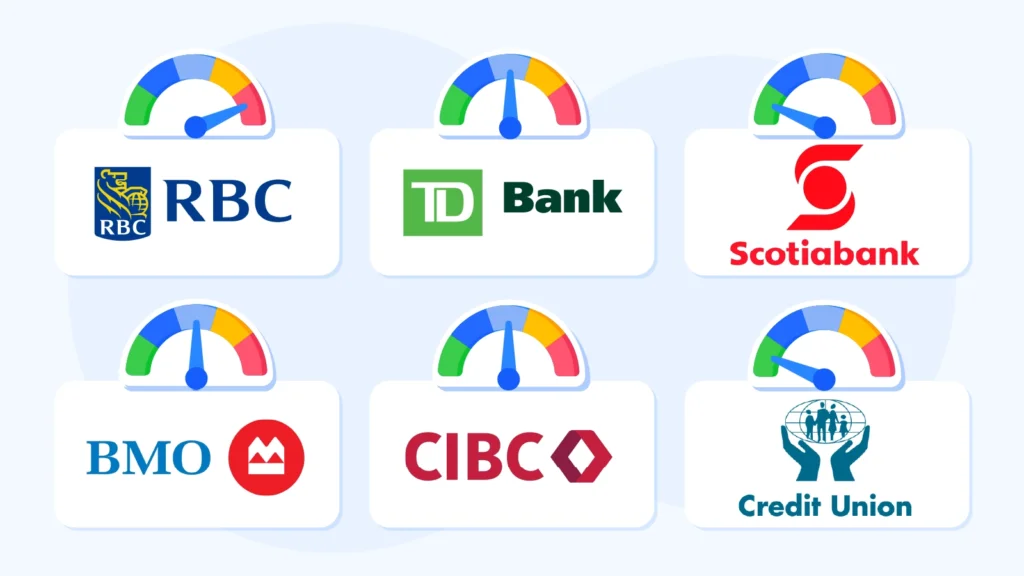
In Canada, banks don’t all treat gambling transactions the same way. What’s the best move? Set up a separate account for your gambling activity. It’s a simple way to keep things organized and avoid potential headaches.
Predicted Changes: 2027-2028 Interac Gambling Framework
CasinoAlpha experts believe that Canadian banks will soon formalize their policies regarding gambling-related transactions. As the market continues to evolve, banks appear to be paying closer attention to how gambling transactions are handled.

Scenario A: Two-Tier System (Our Estimate: 60%)
Interac and Canadian banks could adopt an official policy that clearly distinguishes between provincially licensed casinos and offshore operators.
The first tier would include provincially licensed casinos, such as those licensed by iGaming Ontario, AGLC, PlayNow, Espacejeux, and PlayAlberta. The second tier would include offshore operators, where transactions may either require customer authorization or be restricted entirely. This category would cover casinos licensed by the MGA or UKGC, as well as unlicensed operators.
See how Ontario iGaming compares to offshore licenses in our article.
Impact on Players
Players using provincially licensed casinos would likely experience no issues when making deposits or withdrawals.
For offshore casinos, bank authorization may be required before transactions can be processed.
Meanwhile, transactions to unlicensed or high-risk operators could be blocked entirely.
Scenario B: Transaction Limits (Moderate Probability: 30%)
Banks could impose monthly limits on Interac gambling transactions. For example, a limit of C$5,000 per month. If a player exceeds this limit, they may be required to provide proof of income.
Such a measure could help identify players who spend large amounts of money and may be experiencing financial difficulties as a result. Players who spend less than C$5,000 per month would not be affected.
Scenario C: Full Offshore Block (Low Probability: 10%)
Canadian banks could block all Interac transactions to offshore casinos. This would leave players only the option to play at provincially licensed casinos.
CasinoAlpha believes this scenario is unlikely. First of all, offshore gambling is perfectly legal in Canada. If banks were to block a legal activity, there would be significant backlash from players. Many would turn to cryptocurrencies instead.
The only possible scenario, in our view, is if the government and regulators request banks’ support to direct players toward licensed casinos.
What Players Should Do Now
Canadian players who use Interac should be prepared for potential changes and have an alternative payment method available.
CasinoAlpha experts recommend testing your bank’s current policy. Make a small deposit of C$20-50 at the casino where you are registered. If the funds reach your casino account, it means gambling transactions are currently allowed. If the transaction is blocked, we recommend switching to alternative payment methods.
CasinoAlpha Recommends Having a Backup Bank Account
If you use RBC or TD and your bank blocks gambling transactions, we recommend considering a more gambling-friendly bank, such as Scotiabank. This does not need to be your primary account. You can use it as a secondary account dedicated exclusively to online casino transactions.
There are also many casinos that accept payment methods other than Interac. Visa, Mastercard, e-wallets such as Skrill and Neteller, and cryptocurrencies are some of the most popular alternatives.
CasinoAlpha recommends keeping a record of your deposits and withdrawals. There are cases where a bank initially allows transactions to a casino but later starts rejecting them. Having a clear transaction history can help if you decide to file a complaint.
Why Do Banks Impose Restrictions?
Although it can be frustrating, banks have the right to do so. It ultimately comes down to their internal policies. If a bank decides to block all payments to gambling operators, customers must accept that decision.
The best solution is to look for another bank that allows gambling-related transactions.
Interac’s Role: Payment Processor as Regulator
Interac plays a central role. It provides the infrastructure that allows banks to identify gambling transactions through Merchant Category Codes (MCCs).
How do banks identify gambling transactions?
Through merchant category codes. Every Interac transfer made to a casino is assigned a merchant category code (MCC 7995 = gambling). This makes it very easy for banks to identify when a customer is making a casino deposit. The same rule applies even to the transactions we make when testing a casino.
How could Interac become involved?
Interac could become more involved by introducing additional operator verification measures, transaction monitoring tools, and automated enforcement based on clear policy rules.
We can already see how Mastercard and Visa restrict certain gambling transactions in various jurisdictions. Interac could follow a similar path in Canada.
International Precedent: Payment Processors as Gatekeepers
Canada isn’t alone when it comes to regulating online gambling payments. To better understand where the market may be heading, we looked at how other major jurisdictions handle gambling-related transactions.
United Kingdom
Based on the research conducted by CasinoAlpha, we observed that the UK Gambling Commission (UKGC) works closely with payment providers and banks to block transactions to unlicensed gambling sites. If an operator loses its gambling license, players may lose the ability to make deposits within just a few days.
United States
Payment processors enforce state gambling laws through transaction blocking. In states where online gambling is illegal, Visa and Mastercard can block gambling-related transactions directly.
Australia
In Australia, transactions are generally permitted only to licensed gambling operators. If a player attempts to make a payment to an offshore gambling site, the bank may block the transaction.
CasinoAlpha’s Perspective on the Canadian Market
CasinoAlpha experts believe that Canada may soon adopt a similar model based on cooperation between Interac, provincial regulators, and Canadian banks. Under such a system, players would have full access to provincially licensed casinos, while offshore operators could face restrictions depending on their regulatory status.
Summary: Interac Gambling Transaction Future
At the moment, the situation remains somewhat uncertain and varies from one bank to another. Scotiabank is generally the most permissive, RBC blocks some transactions to offshore operators, and TD reviews or flags certain gambling-related transactions.
Our prediction as CasinoAlpha experts is that a two-tier system could be introduced between 2027 and 2028. Provincially licensed casinos would always be approved, offshore operators licensed by the UKGC or MGA would require additional authorization, and unlicensed operators could be permanently blocked.
Why do CasinoAlpha experts expect changes?
- FINTRAC Monitoring
- Pressure to Comply with Anti-Money Laundering (AML) Regulations
- Expansion of Provincially Regulated Markets
- Reputational Risks
- International Examples
For CasinoAlpha, these are clear signs that changes are on the way and players should be prepared for them. Those who play at provincially licensed operators are unlikely to be affected. However, players who use offshore casinos may encounter restrictions or additional requirements.
What We Recommend You Do Now
- Check the policy of the bank where you hold your account.
- Review the alternative payment methods accepted by the casino you play at. On the Casino Alpha CA website, you can find a complete list of the payment methods available at each casino.
- Consider opening a backup bank account, such as one with Scotiabank.
- Choose licensed casinos to avoid potential issues. Check our website to see which operators we recommend and verify their licensing status.
We expect 2027 to bring further developments in this area. Interac transactions related to gambling may become more heavily regulated. Our advice is for players to choose licensed casinos whenever possible. There, they are far less likely to encounter payment-related issues.
Sources
- InsiderMonkey, About Banking at Canadian iGaming Sites, July 12, 2024, https://www.insidermonkey.com/blog/about-banking-at-canadian-igaming-sites-1322652/
- ElectricBoats.ca, Best Interac Casinos Canada 2026, https://electricboats.ca/
- Interac, Interac e-Transfer Terms of Use, https://www.interac.ca/en/interac-e-transfer-terms-of-use/
Meet Our Experts

Author
Anca Iamandi
Senior Author & Editor
Anca Iamandi is a Senior Author at CasinoAlpha, specializing in licensing analysis and casino reviews. She uses her linguistic precision to decode regulatory grey areas, and offshore jurisdictions. Since joining CasinoAlpha in 2019, she has written 300+ casino reviews and 150+ bonus guides.

Recommended Articles

Why You Should Never Use Credit Cards: The Cash Advance Trap
Have you ever wondered why a C$100 casino deposit made with a credit card can quietly turn into C$105 or even more before you’ve placed a single bet? The answer comes down to how Canadian card issuers classify these transactions.
By Isabell Dreghiciu

Casino Account Closures: Your Rights When Banned
You log into your player account, and instead of the lobby, you get this message: your account has been closed. No explanation, just a line about breaking the terms, worse still if you had money in there, since your balance stays locked.
By Isabell Dreghiciu
Interac e-Transfer Timing Study: When to Withdraw for Fastest Payment
To understand just how much the timing of your withdrawal matters, the CasinoAlpha team ran tests for a week. We made withdrawals on different days, at different times, and kept track of everything. What did we find out? Find out for yourself in the paragraphs below!
By Isabell Dreghiciu

The 96% RTP Myth Explained
Your first impression upon seeing a slot paying out 96% RTP is that it will give you back C$96 for each C$100 you wagered. It’s not that simple. By monitoring 10,000 spins on Starburst, we observed an average RTP rate of 96.2% but also noted that in any individual 100-spin play, the results could be as low as 54% or even as high as 142%. The weekend play you do does not care about RTP, because variance, bonuses, and hit rate determine whether or not you win or lose.
By Adela Mariuta
AGCO Penalties for Relax Gaming and Arrise Solutions
On 7 May 2026, many players saw that some games were missing from Ontario casinos. We had no clue why this was happening, but things got clear days later. AGCO issues penalties against Relax Gaming and Arrise Solution because their games were available on unregulated websites outside Ontario.
By Adela Mariuta
Most Read
1.