Legitimate vs Arbitrary Closure Reasons
Not every account closure is worth fighting. The CasinoAlpha team has gone through the most common closure reasons, so you’ll know right away whether it’s worth spending a whole weekend drafting complaint emails, or whether you’re better off just moving on.
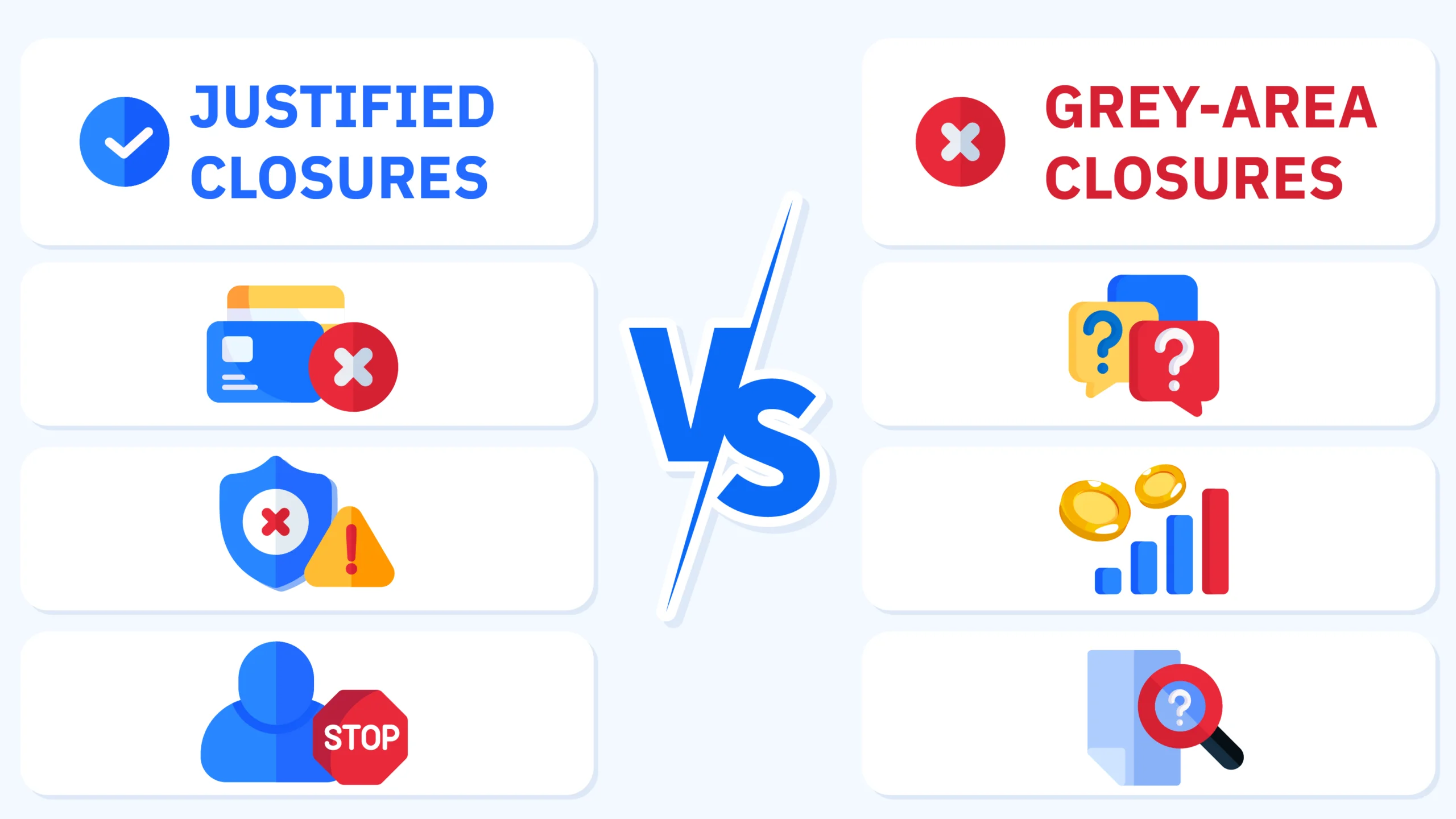
Justified closures:
- We see this one a lot at CasinoAlpha, players do it more often than you’d think, and it almost always ends the same way: account gone. Deposits usually come back, bonus winnings don’t.
- Proven fraud: stolen card, fake identity, chargebacks. A casino will never let this kind of behavior slide! You’ll end up losing your account and the money you’ve won.
- Failed KYC/AML checks, or breaking a self-exclusion agreement. We know it’s frustrating, but the experts on our team always remind you to verify your identity on time.
Grey-area closures:
- Irregular play patterns or vague reasons, with no real detail given. A lot of players tell us their accounts got closed and give us these exact reasons. We’ll say it plainly: it’s worth fighting. This isn’t on you.
- The account closed right after a big win, or with no explanation at all. If this happens to you, our advice is always the same: don’t wait, file a complaint right away.
Here’s a clear rule to help you figure out whether the operator actually had the right to close your account. If you broke a clearly demonstrable, justified rule, the casino has every right to close your account. On the other hand, if you got a vague, generic explanation right after a big withdrawal, you’re in grey-area territory and that’s where it’s worth fighting for your case!
Have you ever run into a problem like this? What was the reason your account was closed? We’re waiting to hear from you in the comments section!
Your Right to Balance Withdrawal
This is something we really need to be clear about, because there’s a lot of exaggeration surrounding this topic. If you’re playing on a site licensed outside Canada: MGA, UKGC or Curacao, for example a Canadian court will have no jurisdiction over the decisions that company makes about your account. There’s no Canadian legal right you can invoke in a Canadian court against an operator licensed in Malta, for instance.
What actually protects you are the operator’s own licence conditions, set by whichever regulator issued that licence. We only recommend trustworthy regulators, such as MGA, the UK Gambling Commission, and the Curacao Gaming Authority. Following the 2024 licensing reform, operators are required to pay out a player’s verified balance when they close their account. There’s one exception here, though: fraud!
Your own deposited funds are almost always returned to you, since that money is yours, not the casino’s. Even winnings from real-money play are taken into account, you’ll get your money back as long as the account wasn’t closed due to fraud.
Unfortunately, bonus-related winnings are often forfeited, especially if the account closure is linked to bonus abuse. Bonus funds come with separate terms and conditions.
The key word above is reputable. This is a licence-condition-based practice at operators who hold a real licence from a regulator with teeth – it is not a guaranteed universal right that applies no matter who you’re playing with.
An unlicensed site, or one holding a licence from a jurisdiction with weak enforcement, can simply ignore this. That’s exactly why checking an operator’s licence before you deposit matters more than almost anything else on a casino review checklist.
If you’re playing on an Ontario iGaming Ontario (iGO)-registered site, there’s an equivalent domestic backstop: AGCO registration conditions require similar fair treatment of player funds, and AGCO can get involved if the registered operator doesn’t respond properly to your complaint.
Getting a Written Closure Explanation
Should the casino tell you, in writing, exactly why your account was closed? We’d say yes, that would be good practice, but it’s not a legal right. Not all operators will tell you right away why they closed your account.
What you can do, though, is file a formal complaint. All licensed operators are required to respond within a set timeframe, usually 10 business days.
In practice, this doesn’t mean you should just wait passively for an explanation you need to request one right away. Send an email to support, mention your account ID, and explicitly ask, in writing, for the reason your account was closed.
From that point on, the operator has a few days to give you a clear answer. And you get the documentation you’ll need later on, if you decide to reach out to a regulator or an ADR entity.
Illustrative Case Study: A Successful Appeal
The scenario below is just an illustrative example we’ve put together to show you how things typically play out in the case of a dispute.
In a typical case like this, a player is playing on an MGA-licensed site and has a balance of C$2,300. All of this money was built up over several months of ordinary play.
One morning, they see that their account has been closed, with the reason given as irregular account activity. No further details are provided. They send requests to support, but for two weeks all they get back are automated responses.
At this point, the player escalates the situation. They file a formal, written complaint, laying out all the evidence and presenting a clear timeline of events. They request the reason in writing, along with confirmation of the account balance. If the operator still doesn’t provide a concrete answer, the player can then file a complaint with the MGA’s Player Support Unit.
The regulator will request the account file from the operator to see why the player’s account was closed. If it turns out that the player had simply switched between, say, two similar slots, or played at higher stakes than usual, the balance is typically released within six weeks.
This is the pattern that unblocks a stalled case: a well-documented request and a complaint filed with the regulator. On top of all that, add patience because you really do need it!
Illustrative Case Study: A Justified Closure
This is also an illustrative scenario, not a real case. Let’s say a player opens accounts under 3 different names. They use the identity details of their spouse and a sibling to claim the same welcome bonus 3 times, from the same casino. The casino’s fraud team spots the pattern and closes all 3 accounts, voiding the winnings that came from the bonuses.
In this case, the amounts the player initially deposited are returned to them, since that’s their own money. The bonus winnings, however, are forfeited for good. This is an account closure that wouldn’t stand a chance in an appeal. Using multiple accounts is a clear violation of the rules. Every casino states this in the operator’s terms and conditions.
How to Actually Escalate a Complaint
Where you can report what you went through depends entirely on who holds the licence for the site you played on. Unfortunately, this is the step most guides tend to leave vague. We’ve taken care of that!
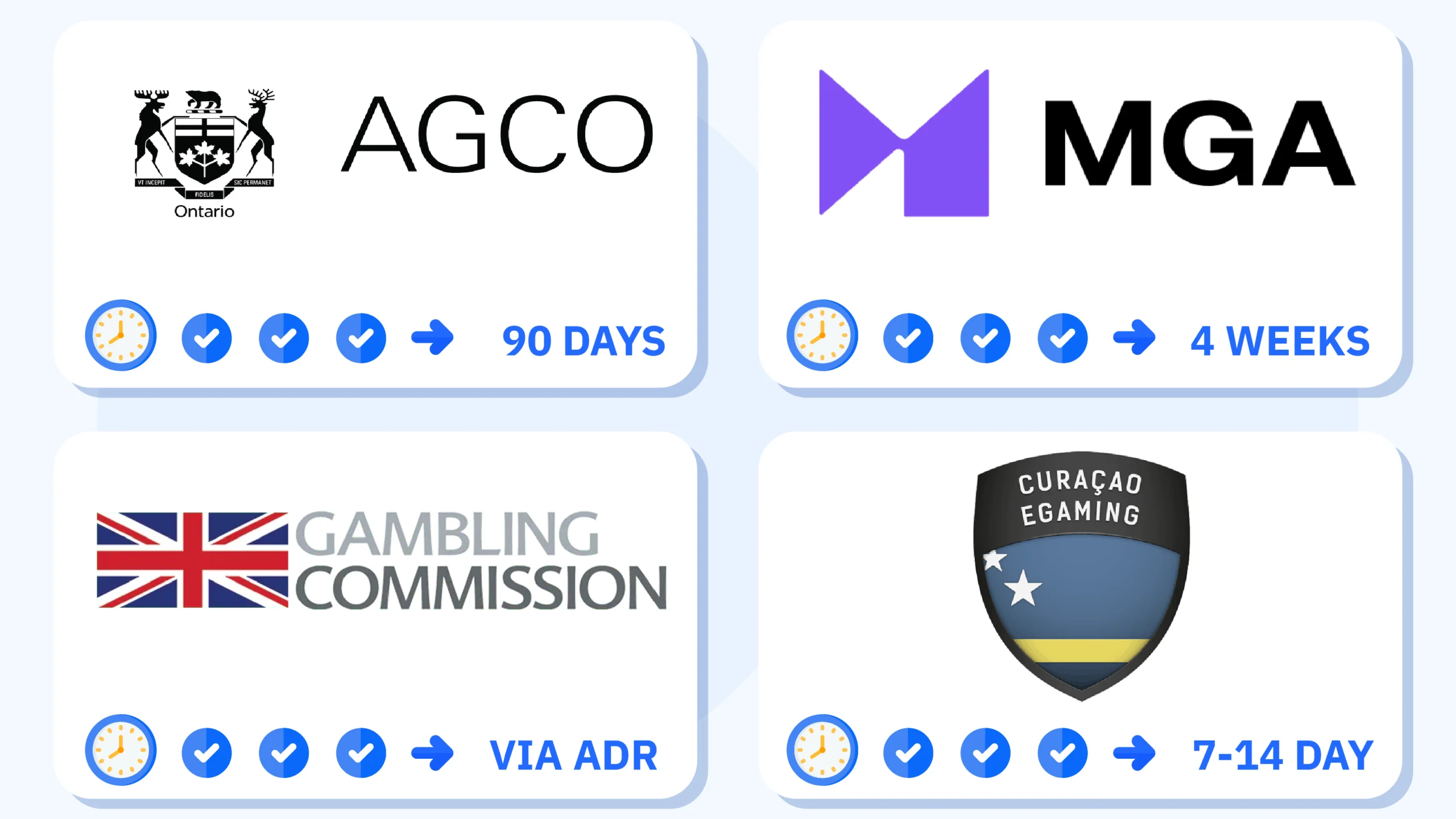
Players often end up complaining on forums or leaving a review instead of filing a complaint directly with the relevant regulator. It’s true, forum posts can put pressure on the operator, but they don’t create a formal complaint file.
We recommend filing a complaint directly through the official complaints channel instead.
The first 48 hours matter a lot! Do these things, in the order we’ve laid out for you:\

- Take screenshots of your account balance, transaction history, and the message you received when your account was closed.
- Ask in writing, by email, for the exact reason your account was closed, along with written confirmation of your account balance.
- Check the operator’s terms and conditions. Most operators state their response timeframe.
- Look in the site’s footer for the operator’s licence number.
- Make a note on your phone with the timeline of events, the date your account was closed, every message you received, and the response time for each.
- Don’t try to open another account with this casino. Doing so could get you permanently blocked.
When to Accept vs When to Fight
If your account was closed following a specific rule violation, there’s not much you can do about it. For example, if you opened a second account under your own name or exploited a bonus, escalating the situation will rarely change the outcome. Regulators tend to side with the operator in these cases.
If, on the other hand, you received a vague explanation right after landing a big win, we’d encourage you to push forward. Send your request in writing and file a complaint with the regulator. Keep in mind the process can take anywhere from a few weeks to a couple of months, depending on the regulator. Persistence matters more than anything else in a situation like this.
The Bottom Line for Players
A closed account, with your money still stuck in it, is a stressful thing we know that. But in a situation like this, the operator has to prove that you actually broke a specific rule.
If the reason is real, you can still get your deposit back. On the other hand, if the casino only gave you a vague explanation, and it showed up right after you landed a big win, filing a complaint with the regulator that issued the licence can help you resolve the situation quickly.
The best protection, though, is the one you put in place before you deposit any money at all. We’d recommend only playing on licensed sites, where players are treated fairly. Always check the licence number before creating your account, not after it’s already been closed!