Canadians Abroad: Can You Access Your Canadian-Facing Casino Account?
Well, here we come to the part that gives many players a headache. Probably you too, since you’ve come across this article, right? Geolocation determines where you are at that moment, not where you were when you opened your player account. Do you understand the difference?
If you’re playing at a casino registered with iGaming Ontario, you must be in Ontario. In the case of offshore operators, things are different. They generally accept players from Canada and do not distinguish based on province. But let’s say you’re going on a 7-day trip to Portugal.
What happens then? That depends on whether or not that country is on the list of accepted countries for the casino where you’re playing. We’ll be honest with you: we’ve noticed that many offshore casinos completely block IP addresses from the U.S. because they pose regulatory issues.
How Casino Geolocation Actually Works
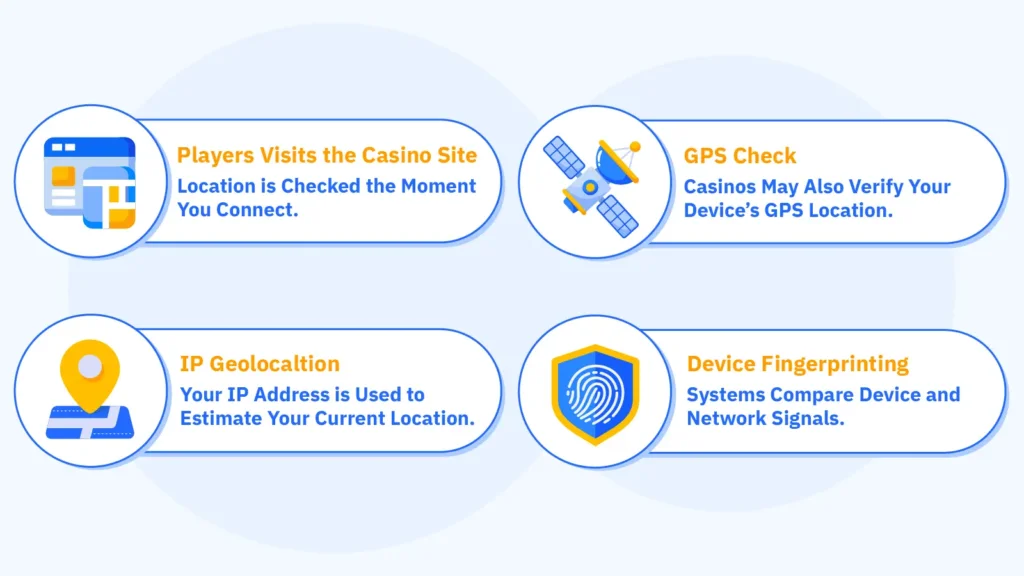 You visit the casino’s website, and the first thing the operator does is check where you’re connecting from. Right then and there. It doesn’t matter where you were when you created your account. And it’s not just the casino you’re registered with that does this.
They all do the same thing. They check your IP address and estimate the location from which you’re connecting. You don’t even realize this check is taking place. Casinos in regulated markets go even further and check your device’s GPS location as well!
VPN Usage: Legal in Canada, But Read Your Casino’s Terms
 Whether a VPN is legal and whether it’s a good idea to use one at a casino. Yes, a VPN is completely legal in Canada. And when we say that, we mean both gambling sites and any other websites. I’ve never heard of a player who’s faced legal consequences for using a VPN on a gambling site.
But are there places where you might run into problems if you use a VPN? Well, using a VPN specifically to hide your location is prohibited in a provider’s Terms and Conditions. We’ve seen this ourselves, and you can see it too if you go and read them. Take a look you can check the 7BitCasino website directly, and you’ll see it there.
So, we can draw the following conclusions. It’s not illegal and doesn’t involve any criminal or legal risk, but if you do this, you’re automatically violating the casino’s terms. If you get caught, the consequences affect your account and funds. In other words, the casino may choose to permanently close your account!
What Actually Happens If You’re Caught Using a VPN
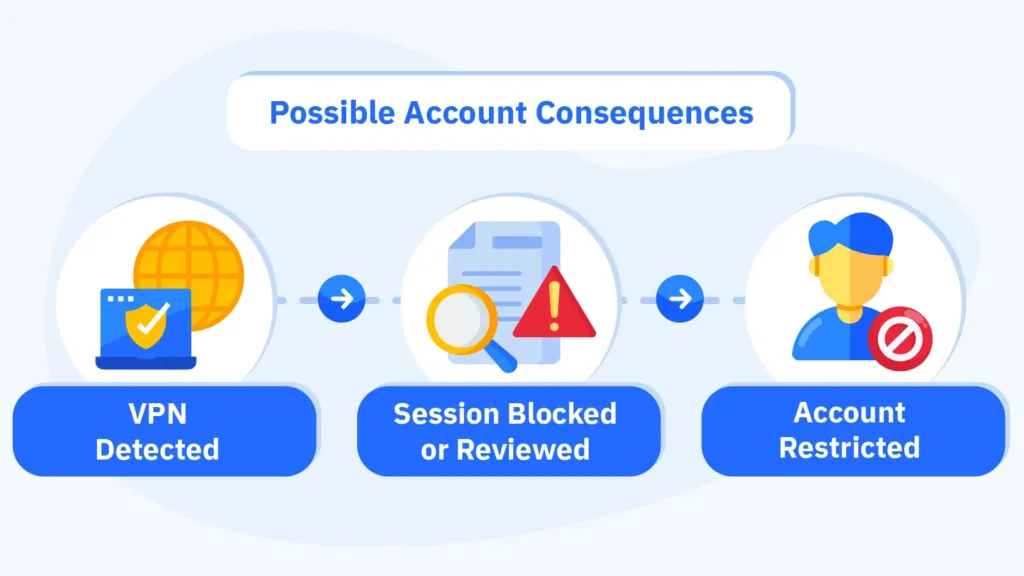
Now you’re probably wondering, what happens if you get caught using a VPN, right? Detection begins the moment the fingerprinting system notices a discrepancy between your GPS location and your connection path.
From there, it all depends on the operator you’ve chosen. Generally, your gaming session will be blocked. The issue can be resolved if you prove your actual location. If you can’t do that, unfortunately, most casinos will permanently close your account.
Our Analysis of Account Closures
Isabell Dreghiciu, the editor of this article, conducted her own analysis and discovered that some operators take a stricter stance on the use of a VPN. You’ve probably noticed by now that if you accidentally violate a casino’s rules, they’ll quickly refund your initial deposits.
Well, things are a bit more complicated now. It varies from one casino to another. However, you can rest assured that such situations do not involve police intervention. It’s a dispute between you and the casino; under no circumstances will the police be involved.
Payment Methods While Traveling
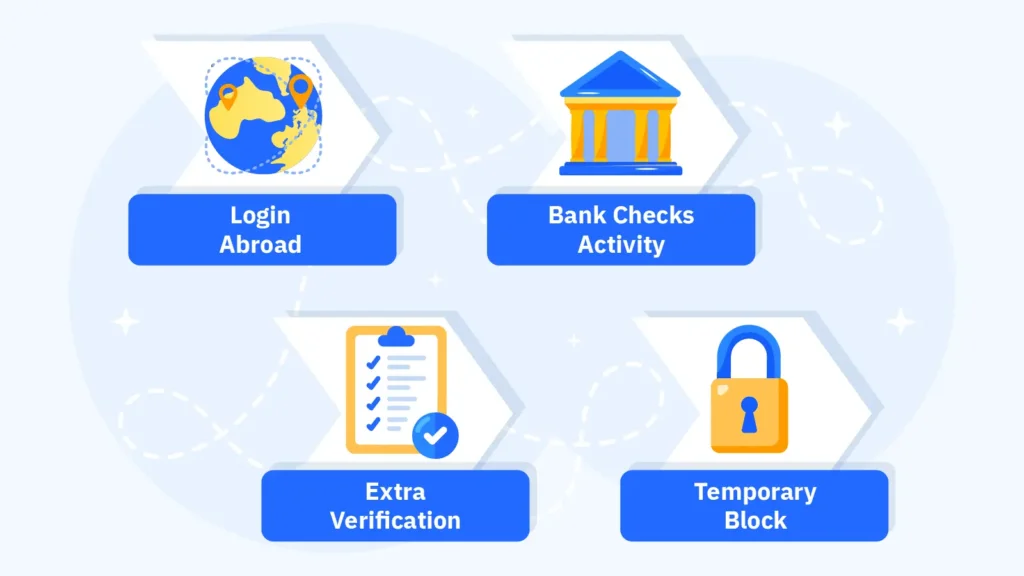 Many websites continue to post false information that no longerr reflects the current situation. Interac e-Transfer does not have a built-in feature that blocks transfers when you are outside Canada. If you can log in to your bank account through the online banking platform then rest assured you won’t have any problems.
The only thing that might cause you problems is related to the fraud risk assessment system. There are situations where the bank may automatically triger a security measure when you log in from another country. What does that mean? It temporarily blocks your account!
Tax Implications for Snowbirds and Expats
Where you were physically located when you gambled at the casino has nothing to do with Canadian taxes. What matters is your tax residency status. As I’ve told you before, the CRA treats winnings from recreational gambling as non-taxable income. What does that mean?
You don’t have to pay tax, and that doesn’t change based on where you play. The only real risk is related to the “substantial presence” test in the U.S. This means the IRS counts all the days you were present in the U.S. this year, one-third of last year, and one-sixth of the year before that.
Does that total add up to 183? Then you may be considered a tax resident. To put it simply, if you spend an average of nearly 6 months a year in Florida, you may be considered a tax resident, okay?
Real Scenarios: Snowbirds, Expats, Business Travelers
Whether you spend part of the year abroad, travel frequently for work, or have perhaps settled permanently in another country, you should know that your location can have a direct impact on your online casino accounts. Let’s take a look at three different scenarios together!
If you’re a snowbird
Do you spend a few months a year in the U.S.? If so, there’s a high risk that you’ll lose access to certain online casinos. Many casinos don’t accept players from the U.S., and an IP address from there can trigger a block on your access.
The longer you stay, the greater the risk. Theres also an important tax consideration you need to take into account. You need to keep track of the number of days you spend in the U.S. to see if you fall under the Substantial Presence Test. If so, you must file Form 8840.
If You’re an Expat
Have you moved permaently to another country? Then the situation is a little diferent. Many casinos that accept players from Canada do not operate in other countries. It means you won’t be able to continue using the same account.
Unfortunately that’s the reality. As far as banking is concerned, things get simpler once your bank gets used to the new transaction patterns. However, from a tax perspective, what matters is where you’re considered a tax resident.
If you’re a business traveler
Don’t worry the risks are much lower! Connecting from abroad for a few days won’t cause any problems. However let’s be honest: there are some providers that may block access based on your detecte location.
Practical Compliance Tips
We’ve also put together a few tips that we hope you’ll take into consideration. The first thing you can do is check the list of countries served by the operator before you travel. If the casino doesn’t allow you to play, our recommendation is not to use a VPN.
We know it’s not illegal, but once you violate the casino’s terms and conditions, you could lose your funds. We don’t think you want that. Don’t forget to set up two-factor authentication so that it works even when you’re traveling.
If you plan to spend more time in the United States, be sure to keep track of the number of days you’ve spent in the U.S. this year, as well as in the previous two years. Please don’t confuse tax issues with those related to gambling.
As I mentioned above, gambling winnings remain tax-free in Canada, right? It’s best to keep a record of your transactions in case your account is unfairly blocked. That way, you can prove it was a mistake on the casino’s part.
The Bottom Line for Players
Just because you’re traveling doesn’t automatically mean you have to give up your casino account. You just need to do a little planning before you leave. Don’t forget, geolocation works everywhere based on the same combination: IP address + GPS + identification technologies. If you use a VPN, you’ll be violating the casino’s terms and conditions. Do you want to risk losing the money in your account?
I don’t think so. Canadian banking services work abroad as well, so you’ll definitely be able to play legally and safely! However, keep the Substantial Presence Test in mind, especially if you’ll be spending a lot of time in the United States. If you’re still unsure what to do, reread this guide carefully and you’re sure to find the best solution!
How We Verified This
We checked Interac’s official FAQ pages, along with the current guidelines from Canadian banks. This allowed us to gather accurate information directly from the source. Furthermore, all information regarding the legality of using a VPN and the application of the terms and conditions was verified by analyzing actual casinos.
We chose Bovada and 7BitCasino. This allowed us to ensure that we would include only accurate information in our guide. This is how we always operate, not just this time! We carefully verify all information before posting an article on our website.